
"Teaching through massive political upheavals, I have been impressed by the radicalism of my students": Dr Sam Wetherell
The academic on neoliberalism, obsolescence, Liverpool and Beatlemania


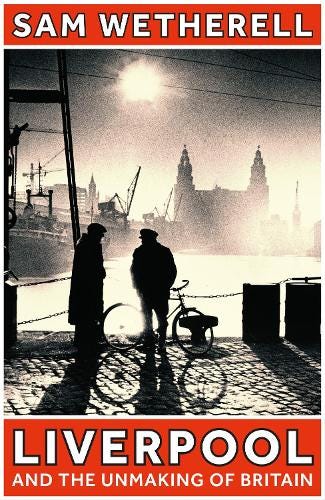
Dr Sam Wetherell is a senior lecturer of Modern British History at the University of York, who specialises in urban history, imperial history and the history of political economy. He published his first book - Foundations: How the Built Environment Made Twentieth-Century Britain - in 2020. His second book: Liverpool and the Unmaking of Britain is set to be released on April 24th next year. Scott caught up with Sam to ask him about his forthcoming book, the life of an academic, neoliberalism, Gen-Z and Liverpool’s ‘obsolescence’.
SJ: Your new book comes out in April next year. What can you tell us about it? What can we expect to see?
SW: I have been really influenced by U.S. histories that told the story of the American 20th century through a particular city, and I'd long thought that I'd wanted to do that in some form in Britain. When thinking about the kinds of stories that I wanted to tell about 20th century Britain, they were stories about obsolescence, but also stories in which decolonisation was central as well as Black British history; histories of migration, citizenship, police violence, that come out of a politics that is more abolitionist rather than welfarist or anti-neoliberal. I also was a little bit sick of British post-war history. It had gotten into this rut of thinking about social democracy versus neoliberalism, the rise and fall of Thatcher, you know, and I'm guilty of this as well. But actually we are looking at the production of surplus populations, massive forms of infrastructural decline, and kinds of rolling unsolvable political crises. I started to think that this demanded a new type of history about Britain and that Liverpool was the place we needed to look for these kinds of histories.
Another thing to add is that the new one will be published with Bloomsbury and it is designed to be more accessible and familiar than Foundations was. I look at the Hillsborough disaster, the 1981 uprisings, the Militant Tendency moment in the 1980s, all of these different kinds of things that are quite familiar, particularly to older generations. So I’m trying to write about these histories through the narrative of these kinds of crises.
SJ: In Foundations, you titled your conclusion “The Burden of Obsolescence” and I noticed you recently used this term to describe the forthcoming book. Could you expand on what you mean by obsolescence?
SW: What I think is really distinctive about urban history in general - and I think that this feels much more profound in Britain than in many other places - is that buildings outlast the moments in which they were built and produced. They outlast the reasons that they were built and the things that they were built to do. So, if we believe that architecture and spaces at some level shape people and are the outcome of political moments - that the University of York is a product of 1960s welfare state expansion of higher education for example - that moment has long, long passed but the buildings still remain. I think this is one of the things that's very distinctive about Britain because it urbanised so early compared to other places in the global north and experienced industrial modernity for longer than many other places. The sense of obsolescence feels more profound. For me it's one of the most essential questions of history that we are constantly being shaped by the past in ways that are very concrete, and that we can think of the world we live in as the outcome of a set of historical processes that have kind of dried up. I wanted to write a book about obsolescence as a rubric for thinking about British history and I actually wanted to include an element of obsolescence that would also be about people, that entire populations have been rendered obsolete: either workforces from former industrial communities, or people whose lives have been shaped by Britain's imperial networks, which also no longer exist. So Liverpool was a way of connecting those things together.
SJ: So drawing on a certain city’s history of trying to stimulate economic regeneration in areas that were becoming obsolete — how did that manifest in Liverpool?
SW: Liverpool is obviously a city that has been hugely shaped by Beatles-led tours. The band is a massive part of the city's identity and it's also something that's coordinated by the local council. The council will audit how much money is brought into the city through Beatles tourism. Beatles-related tourism employs - depending on how you count those employment measures - lots of people in Liverpool. But the thing that I find really ironic is that the original Cavern Club, the place where the Beatles originally played, was destroyed in the 1970s by the city council in order to produce a ventilation shaft for a new form of underground public transit: what would eventually become Mersey rail. But when the local council ran out of money and car ownership shot up, the city was again to be remade. So the Cavern Club had to be awkwardly rebuilt. You have this weird moment where the Cavern Club’s history feels everywhere, but visualising the Liverpool Council demolishing it to build a rapid urban transport system feels weird, it feels out of time.
There's a lot of debate at the moment about how we think about and place British history, and what we think British history is for. There's a fantastic book by a historian called Priya Satia at Stanford who's just written about the relationship between the British Empire and historiography, for example. Or, Hannah Rose Woods' book, Rule Nostalgia.
All of these are fantastic books, but what they miss is the fact that so much of British history is being called upon to basically repair Britain's economy. History in Britain has this really tangible historical work, if we think about nostalgia and Mark Fisher and the slow cancellation of the future - the impossibility of transcending and building something new - that stuff captures something very profound. But I think part of the explanation for that is that Britain's post-industrial economy demands it. You really feel it in York — you’re walking through this town where people are dressed as Vikings or whatever and it’s a huge part of the city’s economy.
SJ: What you’ve said about the Beatles is really interesting. I remember going to Liverpool during my first year after Covid regulations were relaxed and we went to Mathew Street and it was just bizarre.
SW: Totally, yeah, there's something quite desperate about it. The other thing that’s important to mention is that Liverpool wasn’t so much a part of the story at the peak of Beatlemania in the 1960s and 1970s. The Beatles didn't come back to the city often and when they did it was a really extraordinary moment. At the start John Lennon said that they hated coming back but for different reasons. This association of The Beatles and Liverpool came later and you can really see with this kind of extraordinary historical change through their story. The funny thing is that I don't really care about The Beatles! but I have ended up writing about them a lot. I have some friends that are real Beatles fans. I have a very sweet American friend and he is obsessed with The Beatles and he was helping me write parts of the book.
SJ: Are you more of a Rolling Stones guy?
SW: No, not that either. It’s not my thing!
SJ: You say that we should view Liverpool as a prophecy. Are you suggesting that what's happened to Liverpool is what could and is probably happening to a lot of places around the country? Should we view the book as a warning of something that needs to be resisted?
SW: Yeah, sort of. I mean that is probably the limit of what I would be comfortable saying in terms of prescription and talking about the present in concrete political terms. I don't want to fall into the trap of using history to form a series of prescriptive answers for our present moments. History should expand rather than diminish our political horizons. I always bring my politics into my work. Since I was relatively young, politics has been about trying to craft a way of thinking about the left to suit our present moment or coming up with a more emancipatory politics.
Politically, theoretically and intellectually it's inspired by the black radical tradition that emerged in Britain and the United States, which was then rediscovered after the 2020 moment. It's very inspired by the work of Ruth Wilson Gilmore, who's a U.S. radical geographer and theorist of prisons. She wrote this extraordinary book about the prison industrial complex in California called Golden Gulag. She's an activist and her work is far more than just about trying to understand and document; theoretically she's interested in how prisons came to resolve questions of superfluousness and obsolescence in California. So in that sense the book is inspired by her work.
So many ways of thinking about British history come back to Gramsci and Stuart Hall, who was very interested in this question of hegemony, in the building blocks of support for something like Thatcherism. How was Thatcherism so popular? and how was it able to to command hegemony? I think that now we're living in this kind of post-hegemonic moment.
Labour’s recent enormous electoral victory was very different from Tony Blair's electoral victory where he commanded a kind of a hegemony over the country, a sense of “this is the kind of common sense of how the country would be organised.”
SJ: In Foundations, you confront traditional historical narratives around the transition from social democracy to neoliberalism. Neoliberalism is presented as this massive thing which many on the left point the finger at for contemporary problems. But more recently, people have started to move away from it as a theoretical framework. Books like Yanis Varoufakis’ Techno Feudalism comes to mind. How do you view neoliberalism? How useful is it as a term?
SW: I wrote Foundations at a peak moment where people were thinking about, trying to theorise, and then arguing and handwringing about neoliberalism as a ‘thing’. Is it a thing? Is it something that's productive? Is it just another synonym for something like late modernity? or post-modernity? It is something that is always kind of nebulous but is used to describe the present. For me, what was distinctive about neoliberalism was the fact that it was fundamentally grappling with a historical project. It was forced to grapple with the terminus of the developmental state. In Britain, urban neoliberalism was about trying to repurpose Britain's ruins to particular kinds of ends. But we could also think about that in relation to the Chinese transition to neoliberalism in the 1980s. There were extraordinary modernist, totalitarian, mid-century communist states which were obviously very different political formations to mid-20th century Britain, but they had some of the same kind of problems. How do you layer a new kind of ideology on top of something else? This is the thing that made neoliberalism distinctive from the market liberalism of the 19th century. A lot of people said this is just a revival of that; people like the U.S historian Jefferson Cowie refer to the middle of the 20th century as the great exception. I come at it quite differently.
SJ: Would you say that both New Labour and Thatcherite applications of neoliberalism grappled with these issues in different ways?
SW: I think that there are many different ways in which we can characterise New Labour as coming under that rubric of neoliberalism. But when it comes to urbanism, New Labour’s approach to managing obsolescence was a little bit different. Their approach was organised around invoking things like history, culture and nostalgia. Instead of enterprise zones and development corporations in the London Docklands turning into financialised landscapes, they utilised the cultural, heritage and creative industries. You have something like the museums and art galleries of the Salford Quays, the Lowry and in Newcastle-Gateshead. It's much more around animating culture.
What I find really interesting is the real irony that history itself - through the heritage sector and the creative industries - is put to work in a very utilitarian way. Liverpool's economy was “rescued” or was attempted to be rescued by historically related tourism by the UNESCO World Heritage Centre and by maritime museums.
SJ: And is this a New Labour process?
SW: Yeah, I mean there were elements of it in the 1980s and there were actually people debating this in the 1980s; there were a series of historical debates between people like Rafael Samuel and Patrick Wright about heritage and industry. But I think you see a shift towards thinking about that much more intensively under New Labor, particularly in 1997.
One of the first things that New Labor did was create this brand new government department called the Department of Culture, Media and Sports, which still exists. But that was created literally in the summer of 1997 and one of the first things this new government department was tasked with doing was trying to work out the size and scale of Britain's creative industries. They were employing think tanks to go and count all these people that had never previously been seen as in relation to each other. The effect of this would be that artists were now in the same economic category as people who worked in video rental stores, or cleaners in museums. They tried to wield them all into this discrete sector of the economy.
I think it’s one of the things that's very new about New Labour. There were elements where this was happening at a local level before, but it was New Labour that really brought this to the highest level and centrality of government policy.
SJ: What do you make of Starmerism?
SW: I think it's kind of depressing. I am amazed at the lack of imagination of the economic thing, given the crisis that is unfolding in Britain. But I think the thing that has always been most depressing to me has been the absolute insistence on patriotism and the border. Blair was obviously doing this as well in a way that was very clumsy, often offensive. But I also think Blairism tried to rethink what British national identity was at this crucial moment — not that I agree with it. I’m sure I made you listen to Stuart Hall’s Desert Island Disc interview right? He was very optimistic about the creation of a new kind of Britishness, that he believed a new kind of multiracial and post-imperial nationality was potentially emerging — and this is Stuart Hall who does not take this stuff lightly. So the depressing thing for me is that this has been replaced by a situation in which every cabinet minister is photographed in front of the flag without even the barest attempt to think about what that is. The whole thing seems incredibly hostile to any kind of debate or thought. The election result was very interesting in that Labour got like 33% of the vote. So it isn’t popular or a thing that’s producing enthusiasm. My PhD supervisor, James Vernon, always has this classic line from the 1990s: ‘elections are like texts'. They're things that are always to be interpreted. Their meaning is never given or set in stone. You know, they're things that are constantly debated over. And this is certainly the case for that.
I guess the more charitable explanation is that to win power, Labour realised that, because the electoral system is so fucked, they had to win the votes of the only people that decide British elections, which is a few hundred thousand swing voters living in towns in the Midlands, and parts of the north and Essex or whatever. Everything could be ignored apart from these 200,000 people consisting of pensioners and homeowners who we have to pretend are working class.
SJ: I also wanted to talk to you about the recent far-right riots. I couldn’t stop thinking about Robbie Shilliam’s book on Brexit - Race and the Undeserving Poor - and his conclusions on how the working class has become racialised as a white thing in Britain. Has this phenomenon changed at all since Brexit? Do these recent riots reflect that?
SW: I feel like everything that can be said about Brexit has been said by Shilliam. Like so many people from my kind of class and background I voted remain and was surprised by the result and temporarily upset by it. But then I have friends who are much more to the left than myself, in an organised and radical way, who were chiding me for this. I think the European Union as a formation is not something to be excited about, although I think we should feel attached to it. There is a kind of classic, really stupid, Old Left nationalist critique of Brexit which is that Europe makes socialism in one country impossible. This is obviously bullshit. I think the more pressing thing is that we could potentially use this moment as a critique of the kind of imperialist project of the EU, the way it militarised its border through the Mediterranean. But Britain is an unlikely vessel to be the force that would re-articulate that, as I would frequently say to my friends who took that position. The thing that's really surprising is that the enormous amounts of energy, the endless weekends of protests, the people flying EU flags: all of that has evaporated.
But in terms of the far-right riots, I think there was a degree of very organised far-right elements that have been at work for a long, long time and have deep historical roots and have been doing this regardless. But there were also groups of coked-up people in many cases that really wanted to hurt people. I feel like some of the explanations are as much psychic as they are political. There's something really dark going on there, but it’s kind of too soon to tell.
SJ: What is the life of an academic like in 2024? I feel everyone always says that you’re all underpaid and that the work is the most precarious and alienating it’s ever been.
SW: I think it's important to begin by saying that someone in my position - an academic on a permanent contract - has elements of enormous privilege. It is a middle-class salary, you earn more than the median income, there are significant benefits in terms of how the job is structured which means you have control over your time. I'm on research leave soon while my poor long-suffering wife is labouring for another workday upstairs, right. I think that the biggest crisis is less around pay and conditions of work, and more around the collapsing number of opportunities for jobs and work.
It is increasingly the case that a significant amount of teaching in British universities is carried out by people on insecure contracts. That is a very different kind of life because you don't really have any control over where you live and work; you move to a university town, you compete in a highly combustible rental market with a bunch of students and postgraduates for some kind of accommodation; you stay there for a year, and then the person whose research you're covering, or the university, decides to move you on. There's no sense of certainty and then there's the very real threat coming down the line of redundancies and further declining conditions of work. A lot of that dispute is resolved, but we saw for years the collapse and withdrawal of our pension scheme. David Graeber has his very famous line about bullshit jobs. I think the thing that’s most misunderstood about it is that the ultimate bullshit job that David Graeber was talking about was drawn from his own experience as an academic in Britain.
It wasn't the important work of teaching, writing, reading, studying and thinking — that’s not bullshit. It’s the endless admission stuff, paperwork, managing your teaching through an intrusive and extremely technically flawed virtual learning environment. The way that the language is incredibly debased around these things is extraordinary. Having taught in the United States where they have a whole different set of problems, at least the work in that sense is much less alienated. But you are often expected in Britain to not necessarily have control over the things that you're teaching.
The biggest issues are obviously around job security. Either getting a permanent secure job or keeping hold of it. But then there are all of these other ongoing things about ownership of your own teaching, and your own intellectual property within that.
SJ: What are you reading right now?
SW: In terms of fiction, I just finished a fantastic short book called Living Things by a Spanish-Algerian writer called Munir Hachemi.
SJ: What’s it about?
SW: It is about a group of Spanish people that go grape picking. They want to go on like a gap year grape picking in southern France but it's kind of about climate disaster. So, they arrive and there are no grapes because of climate change. So, they must spend their entire time gutting chickens. And then they all sort of fall out with each other. And it turns into this like apocalyptic road movie. It's very funny. Very weird.
In terms of history stuff, I just finished reading Rob Waters' new book, Colonized by Humanity, which is a kind of prehistory to Thinking Black, which is about the integrationist moment in black British history in the 1950s and about a different kind of liberal form of racism that existed at that moment on the terms of aggressive kinds of integration. So he's interested in patronising charity. Charity workers, state officials, basically for community workers that existed after the uprisings in 1958. Yeah, it was absolutely fantastic. Really interesting book that is very provocative. And it's basically a critique of that moment as it's not some sort of golden Age of British race relations.
SJ: Rob Waters and a grape-picking apocalyptic road novel seems like the ultimate combination.
SW: Yeah, that's true, that is what I have been reading.
SJ: I wanted to end by asking you a question regarding Gen Z. We interviewed Rob Doyle a couple of months ago and asked him something similar. We asked him about many things including the cultural nostalgia for the 2000s and where he stands on millennials and Gen-Z. Let’s just say he wasn’t the biggest fan of millennials! What do you think of Gen-Z? Do you see hope?
SW: I mean I guess my only real experience of Gen-Z is from my position as a teacher, so I only see you guys in very, very specific kinds of settings. So, of course I see hope and I don't ever want to fall into the bizarre trap of thinking young people are doing things that I don't like. But generally, I think that in all the times that I've been teaching through massive political upheavals, I've been impressed by the radicalism of my students, in all of the different places that I've taught. Sometimes that radicalism pulls it in weird directions as well. I see a lot of hope in Gen-Z.
Whether I think millennials are the ones to blame, I mean I'm 37 and I guess my anger is levelled upwards in terms of age. I think millennials and Gen-Z have more in common in a material sense in that we are both disenfranchised by capital ownership. I think the difference is that millennials had a lot more expectations about the kinds of life that they would lead to, that have been shattered, which is a different emotional response that produces a different kind of politics and can produce annoying stuff as well. I think Gen-Z will probably be more clear-sighted, and that could mean it will produce a more cynical kind of politics that's better equipped to fighting for scraps in a declining world, but it's not conducive necessarily to solidarity or to hope.